Firm-wide awareness
Ask what needs attention across the firm, then move into the company and workflow that produced the signal.
Tally AI Bookkeeper
Tally helps accounting firms find routine work across companies, use the accounting context already in LedgerHQ, and move approved tasks forward without turning the ledger into a black box.
Ask what needs attention across the firm, then move into the company and workflow that produced the signal.
Tally uses guarded LedgerHQ services for supported bookkeeping work instead of inventing changes in chat.
Duty settings, company scope, permissions, confirmations, period locks, and validation still govern book-changing actions.
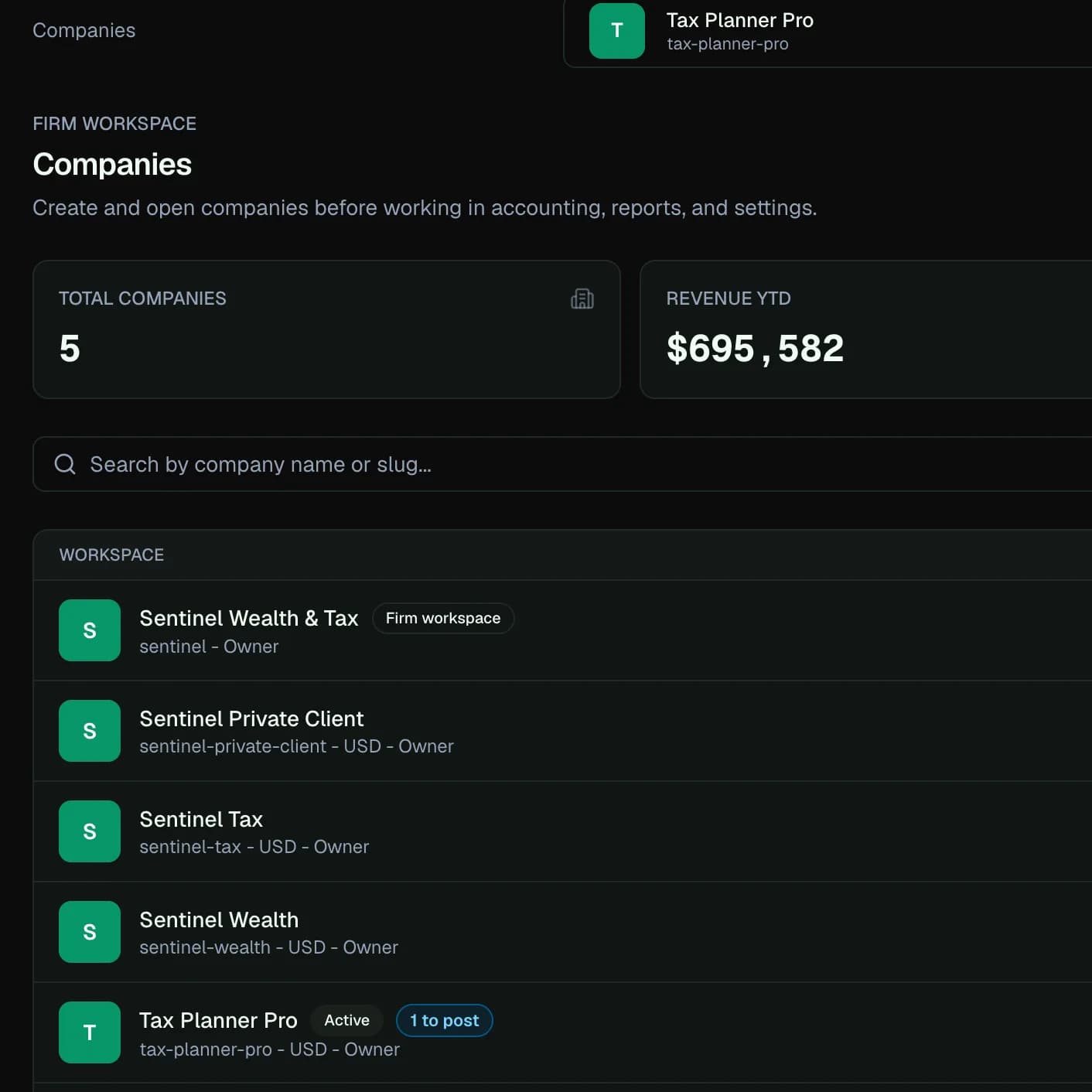
Tally works from the firm and company context LedgerHQ already maintains. That can include bank-feed work, statement coverage, reconciliation readiness, requests, report availability, journal activity, and supported close checks.
The goal is not a mysterious score. A useful signal should lead back to a company, a record, a job, an approval, or another reviewable source inside LedgerHQ.
Tally can inspect context, research supported records, prepare coding and other bookkeeping actions, explain exceptions, and complete work when the firm's configured authority allows it. The exact boundary depends on the duty, the evidence, the user's permissions, and whether the action requires confirmation.
If Tally says it prepared something, the team should still be able to see what remains to approve. If it says the work is complete, it should be able to point to the resulting record or activity trail.
A generic assistant can describe bookkeeping. Tally is connected to the supported LedgerHQ accounting surface, so a request can be resolved against the actual company, chart, bank activity, reconciliation, and report context the firm has authorized.
That connection also creates constraints. Tally does not get a separate path around tenant scope, role checks, period locks, posting validation, or confirmation requirements.
Firms can choose the duties Tally is expected to help with and the authority available for those duties. Ambiguous, externally visible, destructive, sensitive, billing-related, or unusually broad work can stop for explicit intent or confirmation.
Activity and accounting records provide the evidence layer. The operating standard is simple: the model's prose is not proof that the books changed; the resulting LedgerHQ record is.
How the workflow moves
The exact action depends on permissions, company context, and the evidence available. The workflow stays inspectable from intake through review.
Tally works through LedgerHQ's normal accounting and authorization paths. It does not bypass company scope, permissions, duty settings, confirmation rules, period locks, or service validation.
Tally supports LedgerHQ's focused bookkeeping surface. It should not promise payroll, inventory, CRM, broad project accounting, tax filing, or another unsupported suite workflow.
Questions
No. LedgerHQ is the bookkeeping system and firm workspace. Tally is the supervised AI bookkeeper available inside that system.
Some supported routine work can run within authority the firm has deliberately configured. Warnings, insufficient evidence, missing permission, period locks, and confirmation-required actions still stop or route the work for review.
Firm-wide Tally can identify supported work across accessible companies. Company-scoped work still resolves to the selected company before accounting data is read or changed.
No. It is designed to reduce routine search, preparation, and repetition while keeping judgment, authority, exception handling, and accountability visible to the firm.
Keep exploring