Firm workspace
Navigate the company portfolio and broader supervision paths from the firm's operating context.
Multi-company bookkeeping
LedgerHQ gives accounting firms one place to navigate company work while keeping each company's ledger, bank activity, reconciliation, requests, reports, access, and Tally context correctly scoped.
Navigate the company portfolio and broader supervision paths from the firm's operating context.
Charts, entries, bank accounts, reconciliations, reports, and requests remain owned by the correct company.
Staff roles, company access, APIs, agents, and Tally work respect current authorization boundaries.
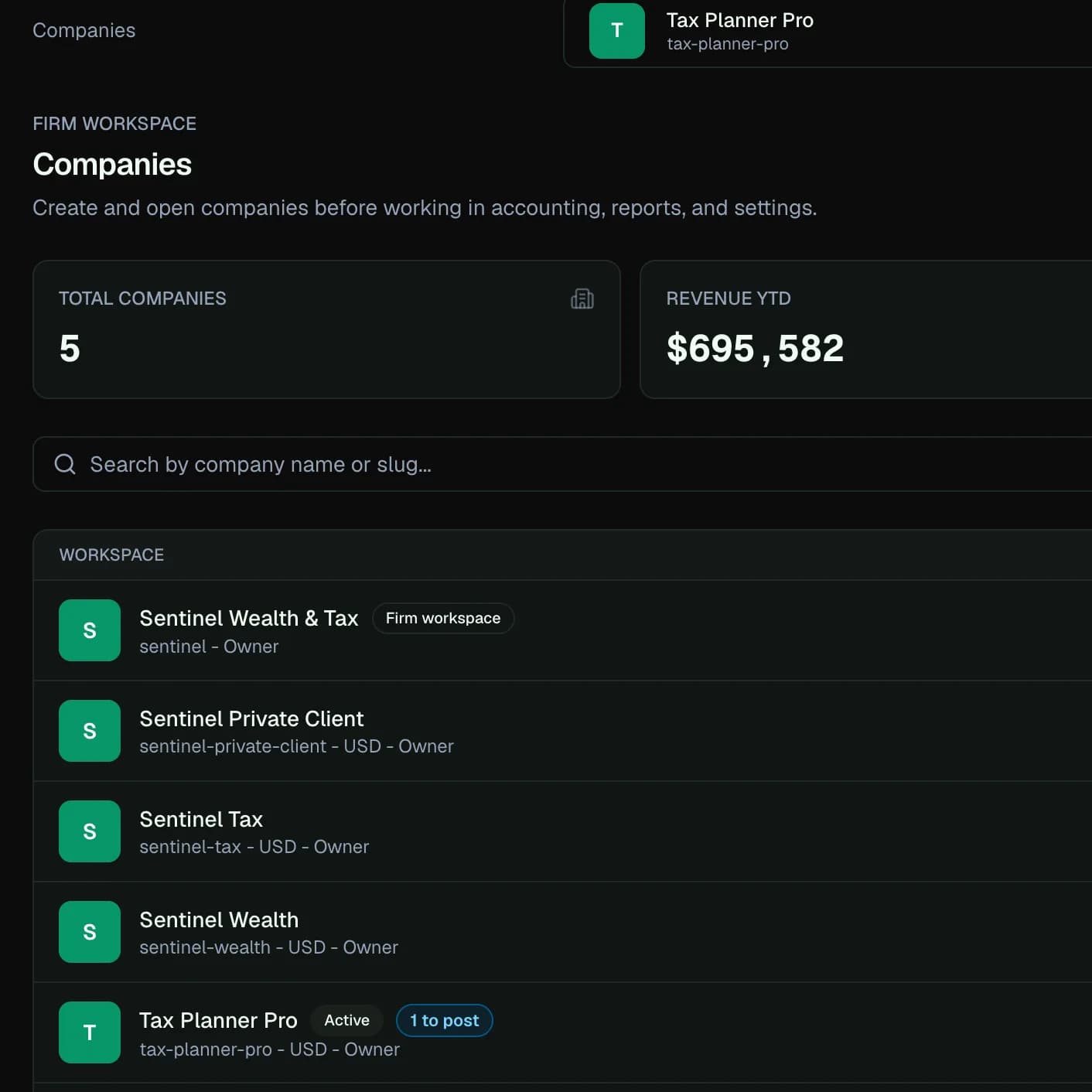
An accounting firm needs a portfolio view, but the underlying books belong to distinct companies. LedgerHQ models the firm relationship and preserves company organization scope for accounting records.
This creates a deliberate boundary between asking what needs attention across the firm and changing a specific company's books.
Firms can repeat a workflow across companies—bank review, coding, requests, reconciliation, reports—without pretending every company uses the same chart, policies, or evidence.
Rules, Tally, and staff history can create leverage, but the actual account, period, entity, and source evidence still come from the selected company's books.
How the workflow moves
The exact action depends on permissions, company context, and the evidence available. The workflow stays inspectable from intake through review.
Firm membership does not erase company access checks. Protected routes and tools resolve the active organization, role, permission, and company relationship before accounting work proceeds.
Multi-company bookkeeping does not mean consolidations, intercompany eliminations, multi-entity ERP, or a shared chart across unrelated companies unless a supported workflow explicitly says so.
Questions
Yes. LedgerHQ is designed around a firm managing accessible company books from one hosted workspace.
Company access and role permissions are resolved for protected workflows. The exact assignment options depend on the staff role and firm configuration.
No. It can identify supported work across accessible companies, but company-specific reads and actions retain company scope.
Keep exploring