Exception-first queues
Separate pending, uncoded, coded, ready, warning, posted, and reconciliation states instead of treating every row alike.
For bookkeepers
Give bookkeepers an exception-first path through bank activity, posting review, reconciliation, requests, and deliverables—while Tally helps with the repeat research and preparation around that work.
Separate pending, uncoded, coded, ready, warning, posted, and reconciliation states instead of treating every row alike.
Move between accessible company workspaces while keeping accounting data correctly scoped.
Use Tally for supported research and preparation, then review the resulting action or record in LedgerHQ.
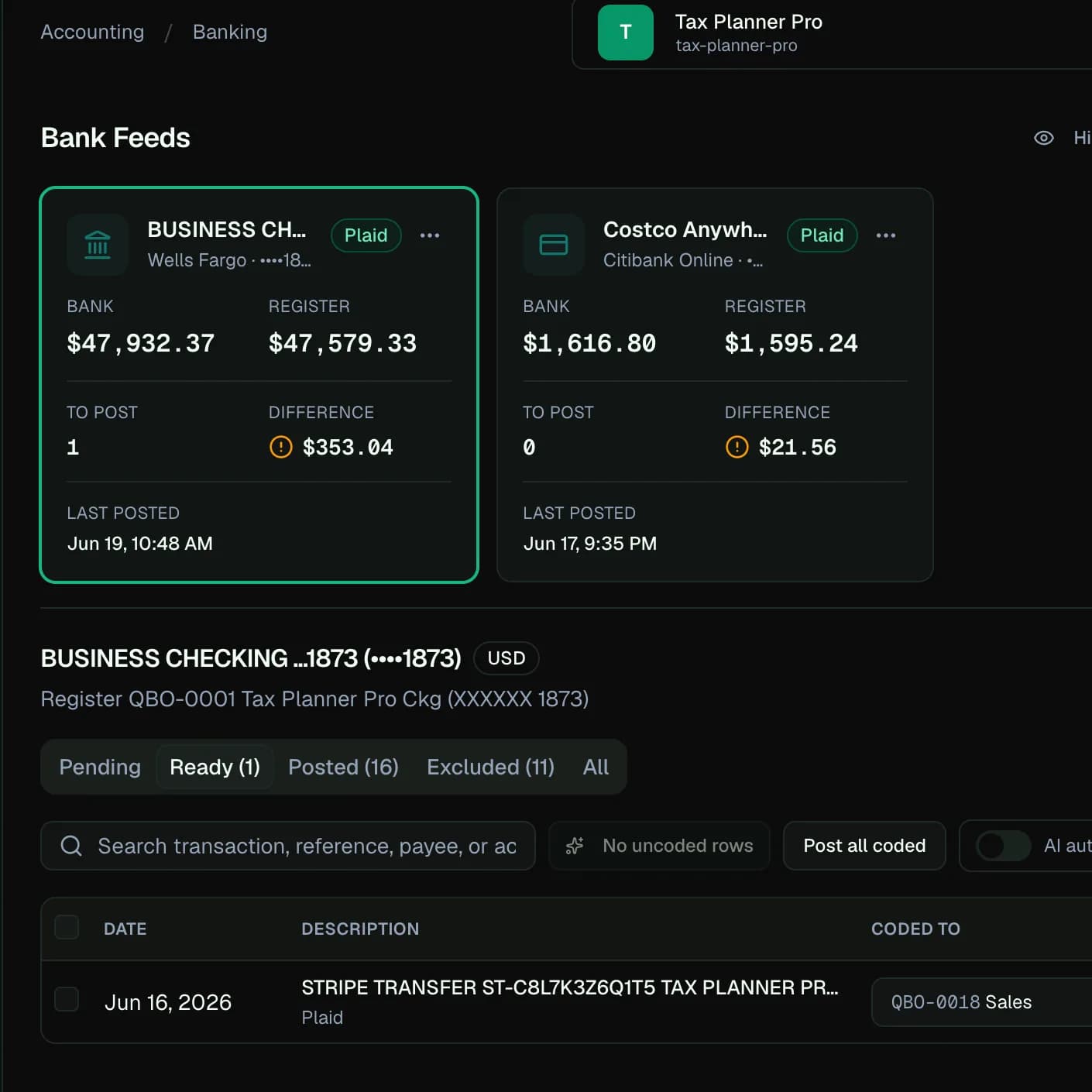
A bookkeeper needs to know what can move now and what is blocked. Bank activity should distinguish pending rows from workable rows, coded items from uncoded items, and clean posting from warnings that still require review.
LedgerHQ keeps the related account, company, chart, register, and reconciliation context close enough that the queue can lead to an accounting decision instead of another spreadsheet.
Firm users can navigate among the companies they are allowed to access. Company-scoped screens and data calls resolve the selected company, while the firm view remains available for broader supervision.
This is operationally different from keeping dozens of disconnected tabs open. The workspace is designed to carry the bookkeeping structure with the selection.
Posted activity is not the finish line. Bookkeepers still need statement evidence, opening and ending balances, cleared activity, an understood difference, and reports that tie back to the ledger.
LedgerHQ keeps reconciliations and reports on the same accounting spine as bank activity and journal entries so the close does not depend on rebuilding a second version of the books.
Tally and rules are most useful when they take repeat work away from the bookkeeper without making ambiguous decisions invisible. Transfers, unusual counterparties, incomplete documents, period-lock conflicts, and policy questions should still surface clearly.
The current mobile product also supports accountant access to firm Tally, companies, requests, coding, statements, reconciliation, and reports. Mobile is a useful operating companion, not a reason to compress complex review into a single status card.
How the workflow moves
The exact action depends on permissions, company context, and the evidence available. The workflow stays inspectable from intake through review.
Bookkeepers operate within firm membership, company access, role permissions, posting controls, period locks, and Tally authority selected by the firm.
LedgerHQ helps with supported bookkeeping workflows; it does not replace professional judgment or claim to automate unsupported payroll, inventory, CRM, or tax-filing work.
Questions
LedgerHQ provides firm-level company visibility and Tally can answer supported firm-wide work questions. Accounting changes still resolve to a company-specific scope.
No. Rules can handle trusted repeat patterns, and Tally can help with supported research or preparation. Pending rows, warnings, incomplete evidence, and judgment calls should remain visible.
Yes. Reconciliations are account-based and use statement dates and balances, posted activity, carried-forward completed balances, and an explicit difference.
The current accountant mobile experience includes firm Tally, companies, requests, coding, statements, reconciliation, reports, and other supported actions.
Keep exploring