Rules before guesses
Trusted repeat patterns can be encoded as bank rules instead of repeatedly asking AI the same question.
AI transaction categorization
LedgerHQ combines trusted bank rules, company chart context, visible transaction states, and Tally assistance so accounting firms can move repeat activity faster while retaining review for uncertain work.
Trusted repeat patterns can be encoded as bank rules instead of repeatedly asking AI the same question.
Category work stays connected to the company's current chart of accounts and register context.
Uncoded, warning, and pending states remain distinct so uncertain activity does not look complete.
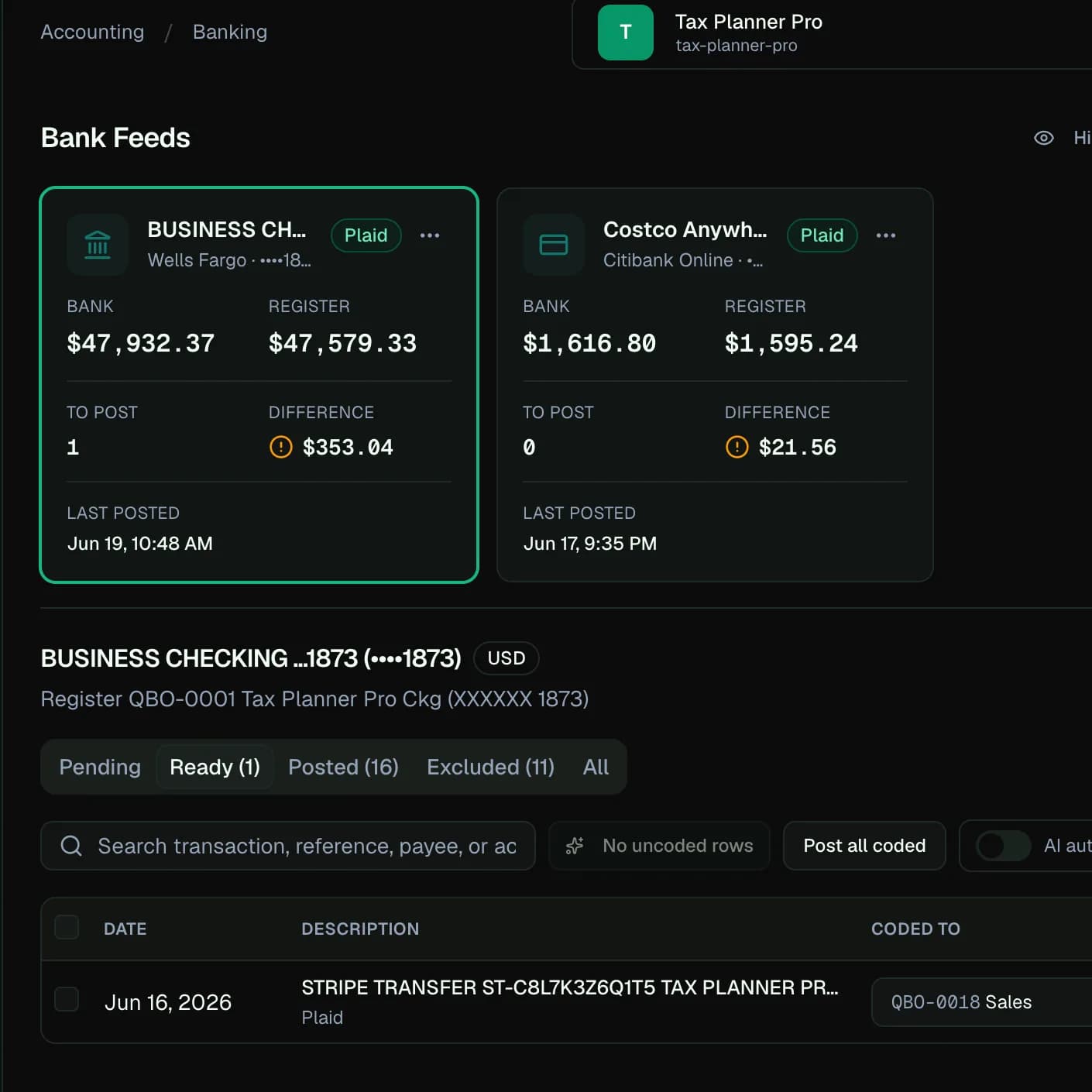
Bank-feed queues often put obvious subscriptions, ambiguous transfers, pending card rows, owner activity, and one-time vendors into the same list. Treating all of them as equal wastes bookkeeper time; auto-posting all of them creates risk.
LedgerHQ separates transaction state and keeps the coding decision tied to the company chart and resulting ledger entry.
A bank rule is the right tool when the firm has a stable, reviewed pattern. It can match supported fields, prepare a category, and—where configured and safe—help move clean activity without asking a model to rediscover the decision.
Rules should stay narrow enough that a similar description does not accidentally capture a different transaction.
Rows that do not match a trusted rule can use Tally's supported transaction search, company context, and accounting tools. The output should distinguish a suggestion or prepared action from a completed posting.
The strongest categorization is supported by prior company behavior, the chart, the transaction facts, and an explanation a bookkeeper can review—not just a percentage.
How the workflow moves
The exact action depends on permissions, company context, and the evidence available. The workflow stays inspectable from intake through review.
Posting remains subject to company scope, coded-ready state, warnings, role permissions, period locks, and any configured Tally authority or confirmation requirement.
AI assistance does not guarantee the correct tax treatment, business purpose, counterparty identity, or account when the underlying evidence is incomplete.
Questions
No. Trusted rules can handle repeat patterns, and Tally can assist with supported research and preparation. Pending rows, warnings, and uncertain transactions remain visible.
Tally can use supported company transaction search and accounting context. A prior category is evidence, not an automatic guarantee that the current transaction has the same purpose.
For a stable, narrow, reviewed repeat pattern, a deterministic rule is usually clearer. AI is useful for context gathering and exceptions that do not fit a trusted rule.
Keep exploring